
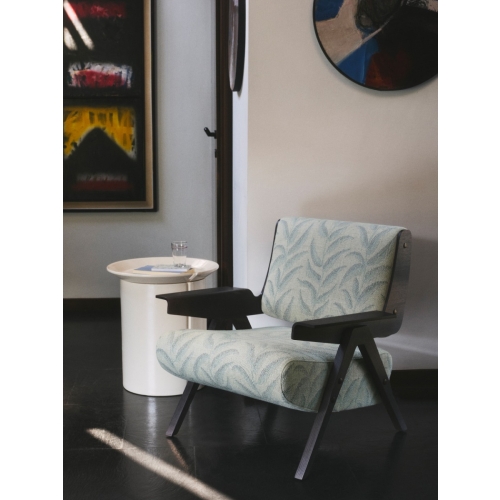
New textures and inspiration: the Kieffer by Rubelli collection
Researching materials is one of the parts of our work we love most. We enjoy discovering new collections, studying textures and imagining how they could be used in our projects.
The new Kieffer by Rubelli fabric collection recently arrived at our showroom in Verona, and we particularly appreciated its research into weaves and material qualities.
We work a lot with natural materials in our projects, which is why we like getting to know collections that combine beauty, quality and attention to sustainability.
The new Kieffer collection gave us the opportunity to explore a key question for anyone furnishing or renovating a home: how do you choose and combine natural fabrics to create welcoming, elegant and personal spaces?
1. Natural fabrics for the home: which ones to choose?
Every fabric has different characteristics that affect not only how it looks, but also comfort and practicality in everyday use.
Among the natural fibres most used in interiors are linen, cotton and wool.
Linen: natural elegance and lightness
Linen is one of our favourite materials, above all for its slightly irregular texture and the understated elegance it conveys.
It works particularly well for curtains and soft furnishings, because it creates a soft, natural effect.
Ivory, sand and beige tones bring out the weave of the material and are easy to pair with wood, stone and lacquered surfaces.
Cotton: versatility and comfort
Cotton is a very versatile fibre, available in many different weaves.
Depending on its structure, it can be used for curtains, cushions, bed linen and some upholstery.
It is a good choice for anyone looking for materials that are pleasant to the touch and easy to combine.
Wool: warmth and depth
Wool is ideal for adding a feeling of warmth to a room.
Throws, rugs and selected upholstery can make a living room or bedroom more welcoming.
When we choose natural fabrics for the home, we always consider not only the fibre, but also the weave and the intended use.
A beautiful fabric also has to suit everyday needs.
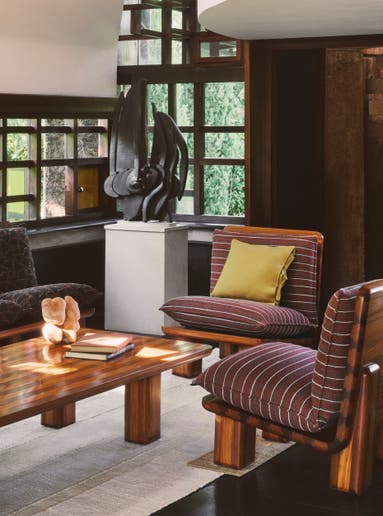
2. How to choose the right fabrics for the living room
The living room is one of the spaces where fabrics matter most.
Sofas, armchairs, curtains and cushions help define the style of the space and make it more personal.
Our advice is to start from the main elements, such as the flooring and the furniture, to build a consistent palette.
If you have a natural oak floor, for example, you can choose linen-coloured curtains and add cushions in olive green, terracotta or brown.
If the living room has marble or stone surfaces, fabrics can help soften the atmosphere.
For sofas used every day, it is also important to consider abrasion resistance and ease of care.
Not all natural fabrics for the home are suited to heavy use, so it is always worth checking the technical characteristics before choosing the upholstery.
3. Linen or cotton curtains: how to choose the right ones?
Curtains are often seen as a finishing detail, but they can completely change the look of a room.
Well-chosen curtains enhance the windows, make the space more harmonious and help manage natural light.
If you want a light, bright effect, you can opt for pale, sheer fabrics.
If you need more privacy, you can choose a denser weave or a double-layer system.
Proportions matter too: hanging curtains close to the ceiling and letting them reach the floor can emphasise the height of the room.
Among natural fabrics for the home, linen is especially popular for soft, relaxed-looking curtains.
Cotton, on the other hand, offers many possibilities thanks to the variety of weights and weaves available.
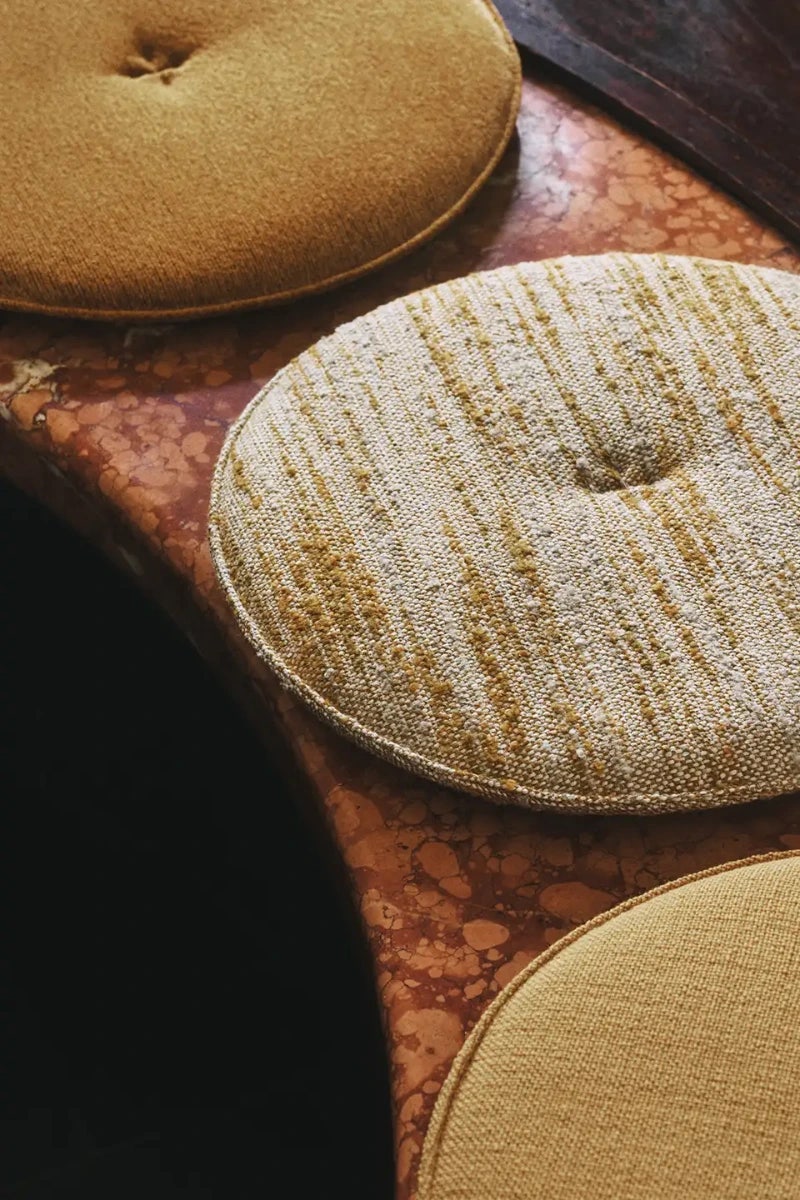
4. How to combine fabrics, wood and marble harmoniously
One of the most common mistakes when furnishing a home is choosing each material separately.
A floor, a sofa and a kitchen can each be beautiful on their own, but not necessarily work well together.
That is why we always recommend creating a material palette before making any purchases.
For a warm, natural space, for example, you can combine oak, Botticino marble, ivory curtains and upholstery in sand or dove grey.
If you prefer a contemporary style, you can introduce burnished metal details or lacquered surfaces.
The secret is to find a balance between smooth materials and more structured textures.
Natural fabrics for the home are particularly interesting in these combinations, because they add softness alongside more compact surfaces such as stone, wood and metal.
You do not need many colours: it is often the differences between textures that make a space elegant and full of character.
5. How to use texture to make a home more welcoming
A room can be elegant even with just a few colours.
The secret is often to work with texture.
Imagine a living room with light walls, a natural wood floor and a sofa with clean lines.
If all the materials have very smooth surfaces, the overall effect can look visually flat.
By adding a curtain with an irregular weave, a few textured cushions and an armchair with a more structured upholstery, the room immediately gains depth.
It is a principle we often use in our projects.
We like to create gentle contrasts, pairing smooth surfaces with more tactile materials and neutral colours with small decorative accents.
Natural fabrics for the home make it possible to achieve this without necessarily adding many elements.
Even a single, well-chosen texture can become the detail that completes the whole room.
6. Which fabrics to choose for the bedroom?
The bedroom should be a space for rest, where materials and colours help create a calm atmosphere.
For this room we often recommend soft tones, gentle textures and balanced combinations.
Linen and cotton work well for curtains and bed linen, while an upholstered headboard can add comfort and personality.
There is no need to use the same fabric for every element.
On the contrary, combining different weaves within a consistent palette gives a richer, more natural result.
For example, you can choose a headboard with a structured texture, light ivory curtains and cushions in slightly deeper tones.
When selecting natural fabrics for the home, always look at the samples in the light of the room.
Colours can change a great deal between natural and artificial light, especially with neutral shades.
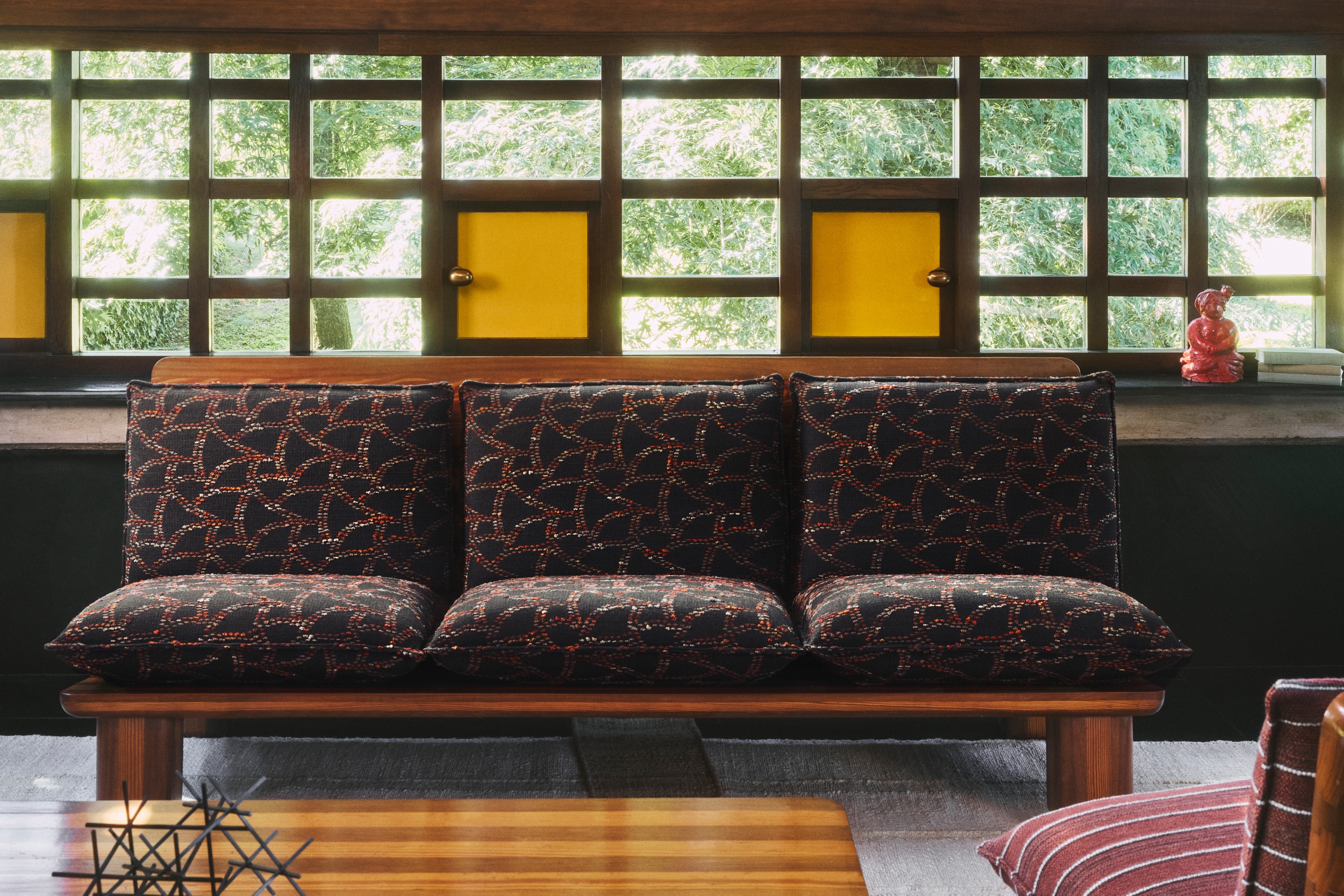
7. Natural fabrics and sustainability: what to consider
Attention to materials is increasingly important when it comes to sustainability.
Many people want to furnish their homes with quality products while paying more attention to the environment.
It is worth remembering, however, that natural does not automatically mean sustainable.
The origin of the fibres, the production processes, durability and care are all aspects to consider.
Durable upholstery suited to everyday use can stay with a home for many years.
That is why, when we choose natural fabrics for the home, we always assess the quality of the product and its technical characteristics.
In our view, sustainability should be part of a conscious choice, not just an aesthetic trend.
8. Why it matters to see fabrics in person before choosing
Photographs are useful for inspiration, but they cannot always show colours, textures and feel accurately.
A beige can look warmer or cooler depending on the light. A weave that looks obvious in a photo can be much more subtle in person.
That is why we always recommend looking at real samples before choosing curtains or upholstery.
In our Martini Verona showroom we have a materials library devoted to a selection of fabrics, woods, stones and finishes.
Here we can compare materials, study combinations and work out with our clients the pairings best suited to their projects.
The arrival of the new Kieffer collection further enriches this research, offering new choices.
Being able to see and touch natural fabrics for the home helps you better understand the characteristics of the fibres and how they can be used in different rooms.
It is also an important moment to imagine how different materials can work together.
9. Furnishing your home with natural materials: visit our showroom in Verona
Choosing materials is one of the most important aspects of furnishing or renovating a home.
A fabric can make a living room more welcoming, enhance the natural light in a room or add character to a space with clean lines.
At our interior design studio in Verona, we guide clients through space planning, the selection of finishes and the making of bespoke furniture.
We love working with natural materials, exploring new combinations and creating spaces that truly reflect the people who live in them.
If you are choosing natural fabrics for the home or would like to refresh your rooms, we will be happy to help you find the solutions best suited to your style and needs.
In our showroom you can discover new collections, including the latest Kieffer designs, and find inspiration in the materials, colours and textures selected for our projects.
📍 We look forward to welcoming you to our showroom in the heart of Verona, to shape your ideas together
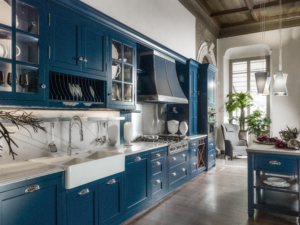
Whether you have bought a new apartment, are renovating or simply want to give your rooms a new style, we invite you to visit our interior design showroom in Verona.
You can see and touch our furnishing solutions – kitchens, wardrobes, bookcases and much more – handcrafted in the Veneto region by Martini Interiors. It is an opportunity to discover authentic materials and high-quality finishes, and to talk directly with one of our designers to find the best solution for your home.
👉 Book a personal consultation by writing to:
serena@martini-interiors.comMartini Verona – Showroom & Design Studio
📍 Piazza Cittadella 3, Verona
🔗 Find out more on our website: martini-verona.it
🔗 Find out more about bespoke furniture handcrafted in the Veneto region:
martini-interiors.com
🔗 Follow us on social media, where we share inspiration, projects and details of our work every day:
📸 Instagram
📌 Pinterest