

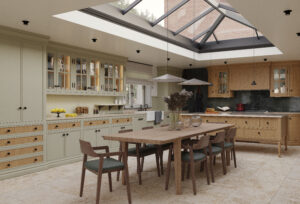
An ergonomic kitchen is not just a comfortable kitchen. It is a space carefully designed to reduce effort, optimize movement, and improve everyday functionality.
The real difference between a beautiful kitchen and an intelligent one lies in ergonomics.
What Is an Ergonomic Kitchen?
An ergonomic kitchen is designed around the people who use it.
There are no universal measurements that work for everyone. Instead, the design considers:
-
The height of the main user
-
Daily habits and cooking routines
-
Frequency of use
-
Available space
-
Appliance configuration
When these elements are properly studied, the kitchen becomes more efficient, more comfortable, and far less physically demanding.
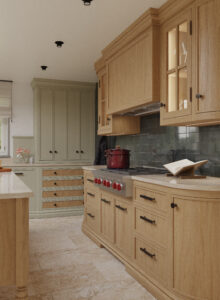
1. Personalized Heights: The Foundation of Comfort
The worktop is the operational heart of the kitchen.
If it’s too low, it strains the lower back.
If it’s too high, it stresses shoulders and wrists.
In an ergonomic kitchen, we evaluate:
-
Ideal countertop height
-
Differentiated levels for prep and washing areas
-
Raised oven positioning
-
Slightly elevated dishwashers to avoid constant bending
Just a few centimeters can dramatically improve long-term comfort.
2. Smart Layout: Fewer Steps, Better Flow
The traditional “work triangle” has evolved. Today, it’s about functional sequence and movement efficiency.
An ergonomic kitchen organizes tasks in a natural order:
-
Storage
-
Washing
-
Preparation
-
Cooking
The goal is to reduce unnecessary crossings and wasted movement. Cooking should feel intuitive and fluid.
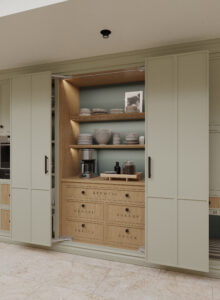
3. Accessible Storage: Ergonomics Means Organization
If you have to bend, reach blindly, or move items around constantly, the space is not ergonomic.
Smart solutions include:
-
Full-extension drawers
-
Custom internal organizers
-
Pull-out shelving systems
-
Functional tall units
-
Concealed sliding backsplashes with integrated storage
When everything is visible and within reach, daily tasks become simpler and faster.
4. Functional Lighting
Lighting is a critical ergonomic factor.
A well-designed kitchen includes:
-
Under-cabinet task lighting
-
Interior cabinet and drawer lighting
-
Differentiation between task and ambient lighting
-
Shadow-free work surfaces
Visual comfort is just as important as physical comfort.
5. Details That Improve Daily Experience
Ergonomics lives in the details:
-
Softly rounded countertop edges for tactile comfort
-
Handles positioned where the hand naturally falls
-
Smooth, silent opening mechanisms
-
Easy-to-clean surfaces
These elements may seem subtle, but they significantly enhance everyday use.
Why Invest in an Ergonomic Kitchen?
Because it improves quality of life.
-
Reduces physical strain
-
Saves time
-
Encourages organization
-
Makes cooking more enjoyable
An ergonomic kitchen is not a luxury feature. It is an intelligent design choice.
And ultimately, that is what transforms a kitchen from simply beautiful into truly successful.
 📍 Visit Our Showroom in Verona
Whether you’ve bought a new apartment, are renovating, or simply want to refresh your space, we invite you to visit our interior design showroom in Verona.
You can experience our furniture solutions firsthand — kitchens, wardrobes, bookshelves, and much more — crafted in Veneto by Martini Interiors.
A chance to discover authentic materials, high-quality finishes, and speak directly with one of our designers to find the perfect solution for your home.
👉 Book a personalized consultation:
serena@martini-interiors.com
Martini Verona – Showroom & Design Studio
📍 Piazza Cittadella 3, Verona
🔗 Learn more on our website: martini-verona.it
🔗 Discover more about custom furniture handcrafted in Veneto:
martini-interiors.com
🔗 Follow us on social media for daily inspiration, projects, and behind-the-scenes details:
📸 Instagram
📌 Pinterest